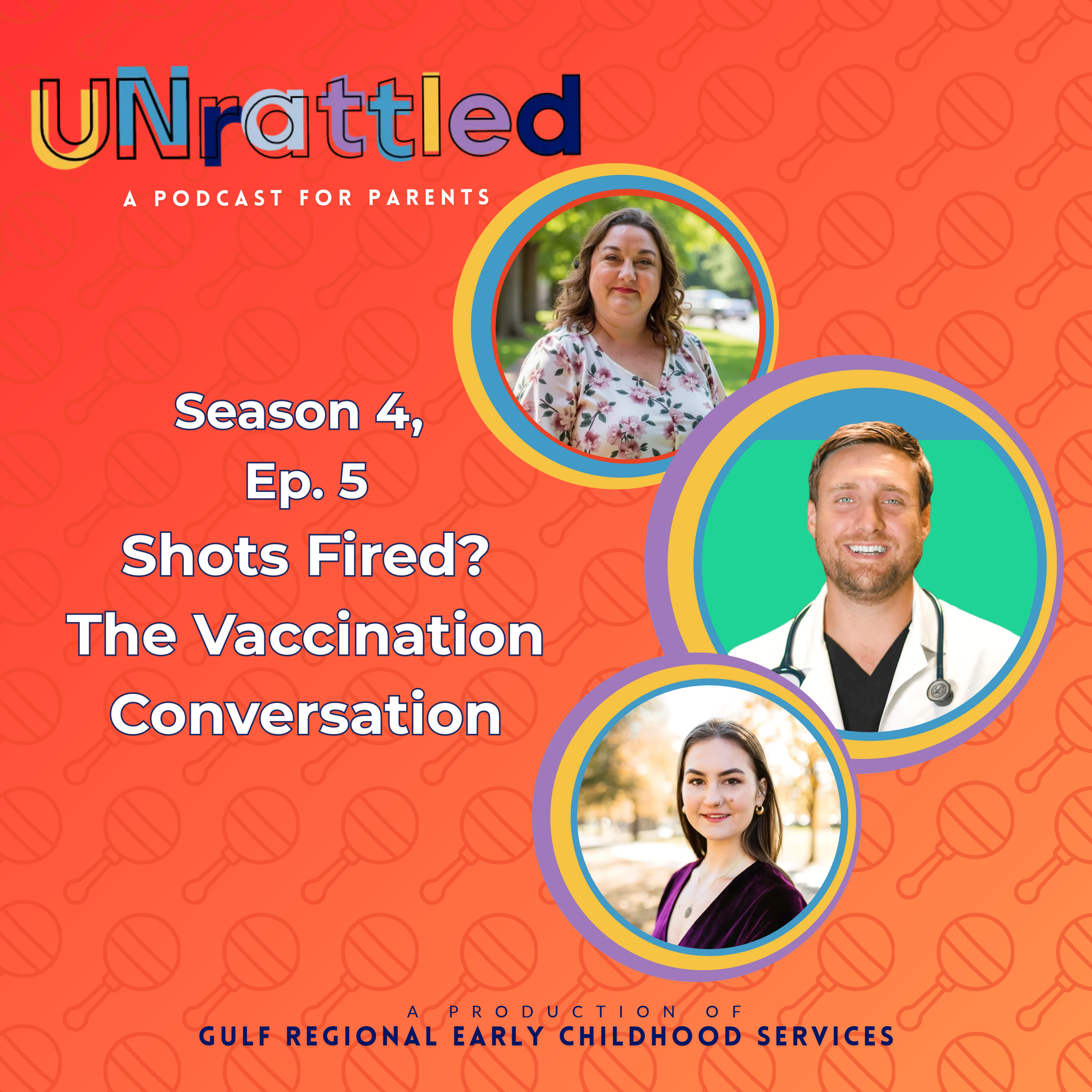
Shots Fired? The Vaccination Conversation
Season 4, Episode 5
Download full episode transcript HERE.
Episode Description -
For many parents, vaccinations have become one of the most complicated—and emotionally charged—decisions they face. But what changed?
In this episode of UNrattled: A Podcast for Parents, Jessica and Venay sit down with board-certified pediatrician Dr. Jonathan Holmes of Children’s Medical Group to look beyond the usual vaccine debate and explore how the world surrounding the decision has changed.
From social media algorithms and information overload to the lasting effects of COVID, political polarization, disappearing childhood diseases, and changes in the relationship between families and their doctors, Dr. Holmes helps unpack why a decision that once felt routine can feel anything but routine today.
This isn't a conversation about winning an argument or telling parents what to think. It's an invitation to slow down, stay curious, examine who and what influences the information we trust, and make room for conversations that don't require everyone to agree. As Dr. Holmes reminds us, sometimes the most important place to begin is with a trusted healthcare provider who knows your child—and with a willingness to keep talking.
Key Takeaways -
More information doesn't always create more certainty. Today's parents have unprecedented access to health information, but algorithms, personalized feeds, and an endless number of voices can make it harder—not easier—to determine what deserves our trust.
Our brains don't weigh every risk equally. Dr. Holmes explains "omission bias"—why doing nothing can sometimes feel safer than taking an action that carries even a very small possibility of harm.
The success of vaccines has changed how we perceive disease. When parents have never personally witnessed illnesses like polio or measles, the disease can feel distant while the vaccine—and its possible risks—feels immediate.
Trust is built through relationships. Convenience has given families more ways to access healthcare, but continuity with a trusted pediatrician or family doctor creates something an algorithm, urgent care visit, or social media post can't easily replace.
Curiosity can create space where arguments can't. Listening to understand doesn't require agreement. Approaching difficult conversations with genuine curiosity can lower defensiveness, help us learn, and protect relationships even when our conclusions differ.
This Week's UNrattled Challenge: Choose Curiosity -
The Challenge:
This week, notice the next time someone says something that immediately makes you want to defend your position.
Before responding, pause.
Instead of explaining why they're wrong, ask one genuine question:
"What led you to feel that way? Why do you believe that to be true?"
Then listen to the answer without preparing your rebuttal.
You don't have to change your mind. You don't even have to agree. The challenge is simply to understand something you didn't understand before.
Because listening isn't agreement. Curiosity isn't surrender. And sometimes a good conversation begins when nobody is trying to win.